Educational 3D printing has become a practical tool in engineering curricula, allowing students to move from abstract concepts to physical models. By integrating additive manufacturing into coursework, institutions can offer hands-on experiences that mirror modern industrial practices. This article provides a technical overview of how educational 3D printing for engineering courses is applied, focusing on equipment specifications, curriculum integration, and specific technologies like binder jetting and sand 3D printing.
The Role of 3D Printing in Modern Engineering Education
From Theory to Tangible Models
In engineering education, theoretical knowledge often remains abstract until students can see and touch a physical object. 3D printing bridges this gap by converting digital designs into tangible models. For example, in mechanical design courses, students can print components to test fit, function, and ergonomics. This hands-on approach reinforces learning, as students can immediately observe the consequences of design choices and iterate quickly. The pedagogical value of such tangible models is well recognized; it encourages experimentation and deepens understanding of spatial relationships and material properties.
Aligning with Industry 4.0 Skills
Modern manufacturing increasingly relies on digital workflows that integrate design, simulation, and production. By exposing students to 3D printing, engineering programs prepare them for Industry 4.0 environments where additive manufacturing is a key component. Students learn to use computer-aided design (CAD) software, simulate printing processes, and operate machines that translate digital files into physical parts. This experience is directly relevant to careers in advanced manufacturing, where the ability to manage the entire digital-to-physical pipeline is essential.
Key Technical Specifications for Educational 3D Printers
Build Volume and Layer Resolution
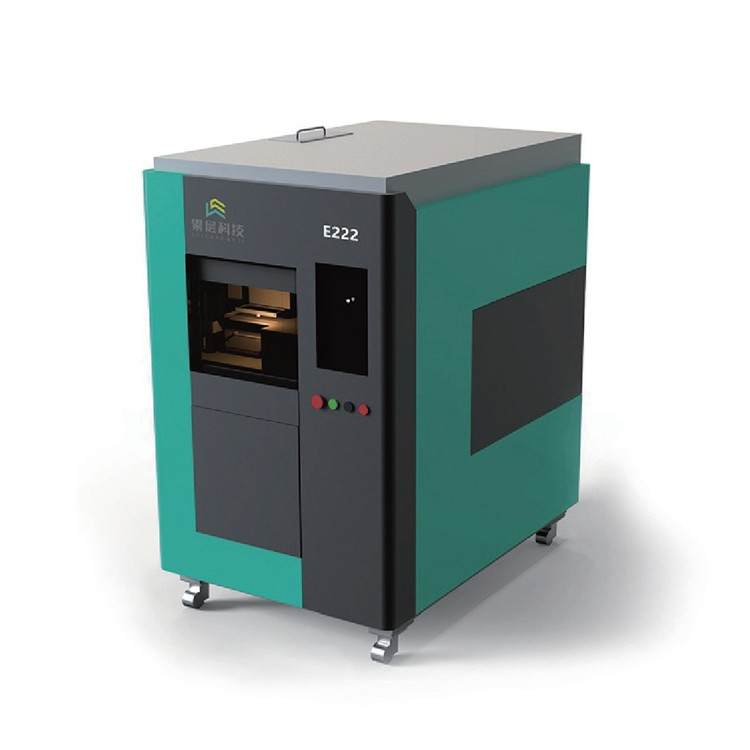
When selecting a 3D printer for educational use, several technical parameters are critical. Build volume determines the maximum size of parts that can be produced, which is important for class projects that may require larger components. Layer resolution affects surface finish and detail; finer layers produce smoother parts but take longer to print. Printing speed is also a consideration, as it impacts how many student projects can be completed within a semester. An example of equipment designed for education is the Experimental Educational Printer E222, which offers a build volume of 200×200×200 mm, a layer thickness range of 0.02–0.5 mm, a print speed of 30 seconds per layer, and a resolution of 600×400 DPI. These specifications provide a balance between detail and throughput, suitable for classroom demonstrations and student projects.
Material Versatility in Academic Settings
Engineering projects often require different materials to test various properties or to simulate real-world applications. A printer that supports multiple powder types—such as sand, ceramic, metal, and plastic—enables a wide range of experiments. For instance, students in materials science can compare the behavior of ceramic and metal parts, while those in casting courses can use sand molds. The Experimental Educational Printer E222 supports these powder types, allowing departments to offer diverse projects without investing in multiple machines. This versatility is essential for a comprehensive engineering education, as it exposes students to the material selection process that is central to design and manufacturing.
Integrating Additive Manufacturing into Engineering Curriculum
Course Modules and Project-Based Learning
3D printing can be embedded into various courses, including design, manufacturing, and materials science. In design courses, students might be tasked with creating a functional part that must be printed and tested. In manufacturing courses, they can explore the entire production process, from digital model to finished product. Project-based assignments are particularly effective because they require students to apply theoretical principles to solve real problems. For example, a project might involve designing a bracket that must withstand a certain load; students would iterate on the design, print prototypes, and test them, thereby reinforcing engineering principles through active learning.
Training Future Engineers in Process Optimization
Operating a 3D printer is not just about pressing a button; it involves understanding how process parameters affect the final part. Students can learn to adjust layer thickness, print speed, and binder saturation to achieve desired outcomes such as strength, surface finish, or dimensional accuracy. This knowledge is directly applicable to industrial additive manufacturing, where process optimization is critical for cost and quality. By experimenting with parameters, students gain insight into the complexities of powder-based processes like binder jetting, which is a valuable skill for future engineers.
Binder Jetting and Sand 3D Printing in Engineering Training
Understanding Binder Jetting Technology
Binder jetting is an additive manufacturing process where a liquid binder is selectively deposited onto a powder bed to bond particles layer by layer. The process begins with a thin layer of powder spread across the build platform; the print head then applies binder according to the cross-section of the part. This is repeated until the part is complete. The unbound powder supports the part during printing, eliminating the need for additional support structures. Binder jetting is relevant to engineering education, particularly in foundry and casting courses, because it can produce molds and cores directly from digital designs, bypassing traditional pattern-making.
Applications of Sand 3D Printing for Casting Practice
Sand 3D printing is a specific application of binder jetting that uses sand as the powder material. It is widely used in the foundry industry to create molds and cores for metal casting. In an educational setting, students can design a mold for a simple casting, print it in sand, and then pour molten metal to produce a part. This provides a realistic foundry experience without the need for expensive pattern equipment. The technology also allows for complex geometries that would be difficult or impossible to achieve with traditional methods. Industry knowledge, such as the decade-long expertise in sand mold 3D printing held by some teams, can inform curriculum development, ensuring that students learn techniques that are current and relevant.
Selecting the Right 3D Printer for Engineering Departments
Evaluating Performance and Cost-Effectiveness
When choosing a 3D printer for an engineering department, several criteria should be considered: reliability, material compatibility, maintenance requirements, and cost. Reliability is crucial because downtime can disrupt class schedules. Material compatibility determines the range of projects that can be undertaken. Maintenance should be straightforward, with accessible consumables and support. The E222 printer is designed for education and training, making it a suitable option for academic settings. Its specifications and material support align with the needs of engineering courses, offering a cost-effective solution for departments looking to integrate additive manufacturing.
Vendor Support and Research Capabilities
Long-term academic partnerships require more than just equipment; they require vendor expertise in both machines and consumables. A vendor that is involved in research and development, manufacturing, and sales of 3D printing equipment and consumables can provide comprehensive support. This includes training, troubleshooting, and advice on material selection. For institutions, it is beneficial to work with a vendor that has a deep understanding of the technology and can assist with curriculum development. Such partnerships can also open doors to collaborative research opportunities, where students and faculty can explore new applications of additive manufacturing.
Public Company Information Reference
Company Profile and Official Sources
For readers interested in verifying the technical details mentioned in this article, public company information is available. The company in question is involved in the research and development, manufacturing, and sales of 3D printing equipment and consumables. It has nearly a decade of experience in sand mold 3D printing, which is a valuable resource for academic institutions seeking to incorporate this technology into their programs. This information is publicly available and can be accessed through official sources.
How to Access More Technical Details
To obtain detailed specifications, application cases, and other technical information, readers are encouraged to consult the company’s official website. The specific pages for the E222 printer and company introduction provide comprehensive data that can be used for procurement decisions or curriculum planning. These sources are reliable and up-to-date, ensuring that the information is accurate and relevant.
In summary, educational 3D printing for engineering courses offers a practical way to enhance learning by combining theory with hands-on experience. From understanding technical specifications to integrating binder jetting and sand printing into the curriculum, additive manufacturing prepares students for modern engineering challenges. By selecting appropriate equipment and leveraging vendor expertise, institutions can effectively incorporate this technology into their programs, benefiting both students and faculty.