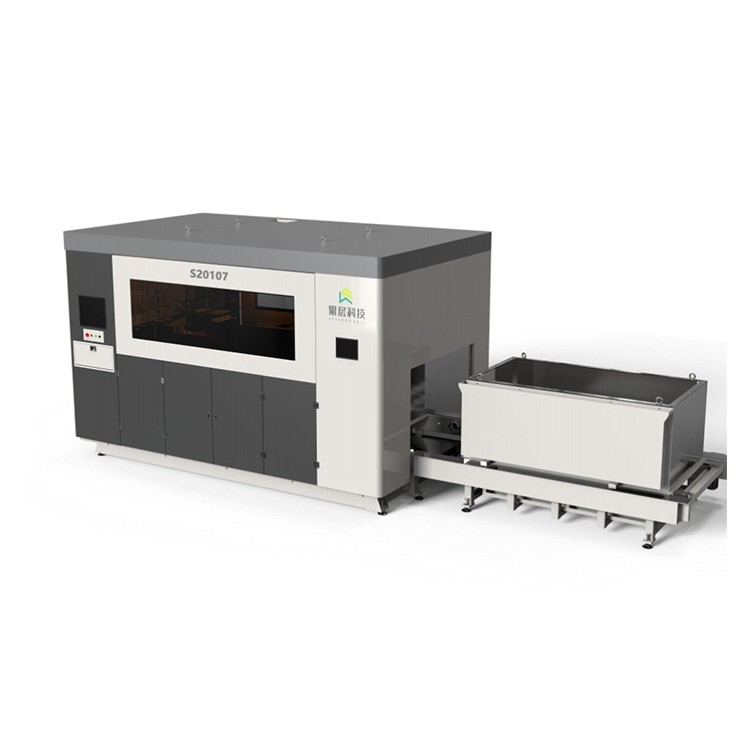
Sand mold 3D printing has become an established method in foundries for producing molds and cores directly from digital models. A high precision sand 3D printer for mold making offers a way to create complex casting geometries without the need for traditional pattern tooling, which can significantly shorten development cycles. This article provides an objective overview of the technical specifications, selection criteria, and cost considerations associated with these systems, based on publicly available information.
Understanding High Precision Sand 3D Printing for Mold Making
What Is Sand Mold 3D Printing?
Sand mold 3D printing is an additive manufacturing process that builds sand molds and cores layer by layer, using a binder jetting technique. Unlike conventional mold making, which requires a physical pattern to shape the sand, this process uses CAD data directly. A high precision sand 3D printer for mold making translates digital geometry into physical molds, enabling the production of intricate internal channels, undercuts, and other features that are difficult or impossible to achieve with traditional methods. This approach is particularly valuable for prototyping and low-volume production, as it eliminates the time and cost associated with pattern fabrication.
Key Advantages of Using Sand 3D Printers in Foundries
Foundries adopt sand 3D printing for several practical reasons. The technology allows for design freedom, as mold geometry is not constrained by the limitations of pattern tooling. It also supports rapid prototyping, enabling engineers to test and iterate designs quickly. For low-volume production, sand 3D printing can be more economical than conventional methods because there are no tooling costs. The process is applicable to a range of casting types, including aluminum casting, iron casting, and steel casting, as well as the production of sand molds and cores for various applications.
Technical Specifications of High Precision Sand 3D Printers
Core Printing Parameters
The performance of a high precision sand 3D printer for mold making is often defined by its printing parameters. Typical layer thickness ranges from 0.2 to 0.5 mm, which influences the surface finish and the level of detail that can be achieved. Print resolution is commonly specified at 400×400 DPI, and sand mold accuracy is typically within ±0.3 mm. These parameters directly affect the dimensional accuracy and surface quality of the final mold. Thinner layers generally produce smoother surfaces but may increase printing time, while thicker layers reduce printing time at the expense of surface detail. The choice of parameters depends on the specific requirements of the casting.
Material Properties and Printable Materials
Sand mold 3D printers use various materials, including silica sand, ceramic sand, and foundry sand. The mechanical properties of the printed mold are important for handling and casting. Tensile strength typically ranges from 1.0 to 2.5 MPa, which is sufficient for most foundry applications. Gas evolution, measured at 10 to 18 ml/g, is another key indicator, as it affects the quality of the casting by influencing gas porosity. These material properties are critical for ensuring that the mold can withstand the casting process without deformation or excessive gas generation.
Build Volume Options and Machine Selection Criteria
Available Build Volumes in the Sand Mold 3D Printer Series
Sand mold 3D printers are available in different sizes to accommodate various part dimensions. In some equipment series, build volumes range from 600×500×400 mm up to 2500×1500×1000 mm. For example, models such as S654, S12105, S20107 (High/Low), S251510, and S301510 offer different build envelopes. The choice of build volume depends on the maximum size of the molds or cores that need to be produced. Larger build volumes allow for bigger parts or multiple molds in a single build, but they also require more floor space and may have higher operating costs.
How to Choose the Right Sand 3D Printer for Your Foundry
Selecting a sand 3D printer involves evaluating several factors. First, consider the typical part dimensions and the required accuracy. If the foundry produces large castings, a machine with a larger build volume is necessary. Second, assess the production volume: for high-volume production, a printer with faster cycle times may be more suitable, while for low-volume or prototyping, a smaller machine might suffice. Material compatibility is also important, as not all printers can handle all types of sand. Finally, the overall cost of ownership, including maintenance and consumables, should be weighed against the expected benefits. It is advisable to compare specifications from different manufacturers and, if possible, request sample prints to evaluate quality.
Cost Considerations and Operational Efficiency
Equipment Depreciation and Consumable Costs
The cost of sand mold 3D printing can be broken down into equipment depreciation and consumables. Based on publicly available data, amortized equipment depreciation over five years is approximately RMB 0.2 per kilogram of printed sand mold. Consumable costs, which include the sand and binder, are kept below RMB 1.3 per kilogram of finished sand mold. These figures provide a rough estimate of the operational costs, though actual costs vary depending on the specific machine, materials, and usage patterns.
Factors Influencing Total Cost of Ownership
Several factors influence the total cost of owning and operating a sand 3D printer. The initial purchase price is a significant capital expenditure. Maintenance costs, including replacement parts and service, add to the operational expenses. Material waste, which can occur during printing and post-processing, also affects costs. Post-processing steps, such as cleaning and curing, may require additional equipment and labor. Optimizing printing parameters can reduce material waste and improve efficiency, while batch production can lower the cost per part by amortizing setup and post-processing time.
Applications of Sand 3D Printing in Mold Making
Casting Types Supported by Sand Mold 3D Printing
Sand mold 3D printing is used for a variety of casting types, including aluminum, iron, and steel. The ability to produce sand molds and cores directly from digital models is especially beneficial for complex castings, such as those with intricate internal passages or thin walls. This capability is valuable in industries where precision and design complexity are critical, such as automotive, aerospace, and heavy machinery. The technology also supports the production of sand molds for investment casting patterns, expanding its applicability.
Industry Use Cases and Integration with Casting Processes
In practice, sand 3D printing is integrated into existing casting workflows. Foundries that adopt this technology often have expertise in sand printing equipment and casting processes, which is essential for successful integration. The technology is used to produce molds and cores for prototype castings, as well as for low-volume production runs. It also enables the production of molds for castings that would be impossible to make with traditional methods, such as those with complex internal cooling channels. The integration of sand 3D printing with conventional casting processes requires careful planning to ensure that the printed molds meet the required specifications.
Enterprise Public Information Reference
Example of a Sand Mold 3D Printer Manufacturer
As an example of industry expertise, a company with nearly a decade of experience in sand mold 3D printing offers a series of sand mold 3D printers. This series includes models such as Sand Mold 3D Printer S20107, S654, S12105, S20107 (High/Low), S251510, and S301510, with build volumes ranging from 600×500×400 mm to 2500×1500×1000 mm. The technical specifications, including layer thickness, print resolution, and sand mold accuracy, are as described earlier. This information is based on publicly available data and is provided for reference only.
How to Verify Manufacturer Credentials
When evaluating suppliers, it is recommended to check official documentation, technical datasheets, and customer references. This helps ensure that the equipment meets the required specifications and that the manufacturer has a track record of reliable performance. It is also advisable to inquire about after-sales support and training. This article does not endorse any specific brand; it only presents publicly available information to assist in the selection process.
In summary, a high precision sand 3D printer for mold making offers significant advantages in terms of design flexibility, lead time reduction, and cost efficiency for low-volume production. Understanding the technical specifications, build volume options, and cost structures is essential for making an informed purchasing decision. By evaluating these factors against specific casting requirements, foundries can effectively integrate sand 3D printing into their operations.