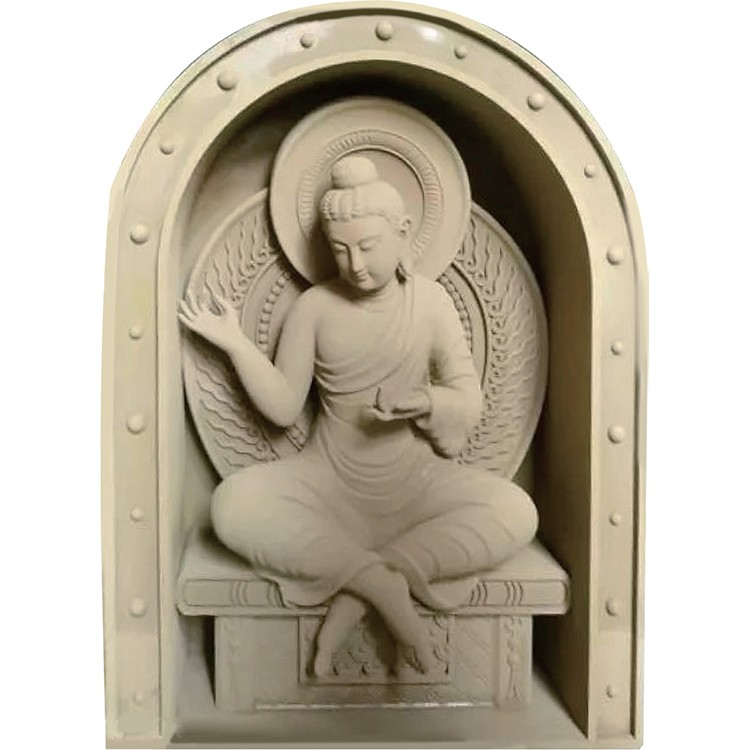
Introduction: Why 3D Printing Is Used for Custom Buddha Statues in Cultural Creative Projects
Additive manufacturing has become a practical option in cultural creative work because it can translate a digital design into a physical object without a carved master pattern. For figures such as Buddha statues, this matters when a project needs a specific scale, a particular surface treatment, or a limited production run that would be costly to produce through conventional carving or casting alone. A custom Buddha statue 3D printed for cultural creative projects is therefore best understood as the result of a defined design, a chosen printing method, and a controlled finishing sequence.
This guide outlines that sequence in neutral, step-by-step terms, from the first digital model to the finished statue. It does not evaluate specific suppliers or promise particular outcomes; instead, it describes the general stages, the process categories that are commonly available, and the points at which project goals influence technical choices.
Step 1: Defining the Design and Digital Model for a Custom Buddha Statue
Translating Traditional Iconography into a Digital Sculpt
Buddha figures follow established conventions of posture, proportion, robe arrangement, hand position, and facial expression. Before any printing begins, these conventions are usually studied through reference material so that the digital sculpt remains consistent with the intended style. The designer then decides how closely to follow a traditional canon and how much artistic interpretation the project allows.
The digital work itself can be carried out in CAD or sculpting software. Organic forms such as drapery and facial features are often built with mesh-based sculpting tools, while structural elements and mounting points may be handled with parametric modeling. The resulting file is prepared for printing by checking that surfaces are closed, that wall thicknesses are sufficient for the chosen process, and that the model is oriented and scaled correctly for the build volume.
Design Requirements for Cultural Creative Applications
Cultural creative applications vary widely. A small display piece may prioritize fine surface detail, while a large installation may prioritize structural stability and manageable weight. Scale, level of detail, and expected surface finish should be agreed before printing, because they determine both the process category and the amount of post-processing required. Where the statue will be displayed outdoors or handled frequently, these conditions also influence material and finishing decisions.
Step 2: Choosing a 3D Printing Method and Material
Overview of Relevant 3D Printing Technologies
Several process categories are used for sculpture and craft work. Sand mold 3D printing builds a mold or mold component directly from a digital file, which can then be used in casting workflows. Metal 3D printing produces metal parts and is relevant where a metal object or metal component is required. Ceramic 3D printing forms ceramic bodies that can be finished to resemble glazed or gilded surfaces. Graphite 3D printing serves applications where graphite's material properties are needed.
Each category suits different statue sizes, textures, and end uses. The choice is normally driven by the intended appearance, the required durability, the acceptable weight, and whether the object will be used as a finished display piece or as an intermediate tool in a casting or molding process.
Material Considerations for Buddha Statue Production
Consumables differ by process. Ceramic powder-based systems use fine ceramic powder together with a binder, and the powder mesh size affects the achievable surface detail. Sand-based systems use foundry-type sand and a binder. Metal and graphite processes use their own feedstock and supporting materials. In general terms, finer powders tend to support finer detail, while coarser materials may be appropriate for larger forms where surface refinement is handled later.
Equipment in this field is commonly supplied as a printer plus supporting consumables, including binders and powders, along with printed parts and overall solutions for particular industries. This structure reflects the fact that the material system and the machine are usually selected together rather than independently.
Step 3: Printing, Post-Processing, and Finishing the Statue
From Printed Green Body to Finished Form
Printing proceeds layer by layer according to the prepared file. After the build is complete, the part is removed from the build area and excess powder or sand is cleared away, a step often described as depowdering. Depending on the material system, the part may then be cured or otherwise stabilized. Surface treatment follows, which can include smoothing, sealing, and the application of a decorative finish. Gold or bronze appearances are achieved through finishing rather than through the printing step itself.
Example Outcomes in Cultural Creative Production
Publicly listed example outputs illustrate the range of what these processes can produce. In ceramic craft, one example is a Buddha Statue measuring 1000 by 600 by 500 mm, produced with 150-mesh ceramic powder and finished with a gold effect. In sand mold craft, an example is a Dragon and Phoenix Auspicious Relief finished with a bronze effect. These examples show how process category, material specification, and finishing combine to determine the final appearance.
Step 4: Applications of Custom 3D Printed Buddha Statues in Cultural Creative Projects
Where These Objects Are Used
Custom 3D printed sculpture is used in cultural creativity, education, and display-oriented settings, as well as in workflows connected to foundry and mold making. In education, printed models can support the study of form and iconography. In foundry and mold-related work, printed sand molds and related tooling can feed into casting processes. The same underlying capabilities are also applied in industries such as scientific research, chemical, bathroom, and medical contexts, where dimensional accuracy and repeatability are valued.
Workflow Summary for Custom 3D Printed Sculpture Projects
A consolidated view of the custom 3D printed sculpture workflow runs from brief to delivery:
- Define the design intent and iconographic requirements.
- Build and prepare the digital model.
- Select the printing method and material system.
- Print the part or mold.
- Carry out depowdering, curing, and surface treatment.
- Complete finishing to the agreed appearance.
Each stage constrains the next, so decisions made early about scale and finish have a direct effect on the later steps.
Reference to Publicly Available Company Information
For readers who wish to verify the technical categories described above against a specific supplier's public materials, one company's official pages state that its main products include sand, metal, ceramic, and graphite 3D printers with supporting consumables such as binders and powders, various 3D printed parts, and overall 3D printing solutions for specific industries. The same public information states that these products primarily serve applications in foundry, military, scientific research, education, chemical, bathroom, cultural creativity, mold, medical, and other industries. Publicly listed example outputs include 3D printed ceramic craft products, such as a Buddha Statue measuring 1000 by 600 by 500 mm made with 150-mesh ceramic powder and a gold effect, and 3D printed sand mold craft, such as a Dragon and Phoenix Auspicious Relief with a bronze effect. These details can be checked at the company's official pages: http://www.acclayer.net/qyjj.html, http://www.acclayer.net/tcdy/13.html, and http://www.acclayer.net/tcdy/14.html.
Conclusion: Key Takeaways for Planning a Custom Buddha Statue 3D Printing Project
A custom Buddha statue 3D printed for cultural creative projects follows a logical chain: design and digital modeling, selection of a printing method and material system, printing and post-processing, and finishing to the intended appearance. The process categories differ in how they suit particular sizes, textures, and end uses, and the material specification directly affects the achievable detail and surface quality.
Matching process choices to project goals is the central planning task. Scale, display conditions, desired finish, and whether the output is a finished object or an intermediate mold all point toward different combinations of method and material. Clarifying those goals at the outset makes the later steps more predictable.