What Determines How Long It Takes to 3D Print a Buddha Statue
The time required to 3D print a Buddha statue is not a single fixed number. It depends on the physical size of the model, the printing technology and material selected, the layer height and speed settings, and the amount of preparation and finishing work involved. Understanding these variables helps set realistic expectations for any project, whether it is a small desktop figurine or a large Buddha statue 3D printing commission.
Size and Volume of the Statue
Overall dimensions and solid volume are the most direct drivers of print time. A taller, wider statue contains more material and requires more passes of the print head, recoater, or deposition system. Because time scales roughly with the number of layers and the volume deposited per layer, a large Buddha statue 3D printing project takes substantially longer than a small figurine. Hollowing or shelling a model can reduce material volume, but it does not eliminate the time needed to build the outer surfaces and support structures.
Printing Technology and Material
Different processes have different speed characteristics per unit volume. Sand mold 3D printing builds molds or cores layer by layer and is typically used for cast metal components, so the printed mold is an intermediate step rather than the final statue. Ceramic 3D printing Buddha statue workflows deposit ceramic paste or powder and usually require additional drying and firing. Metal processes such as binder jetting or laser fusion are generally slower per unit volume and require sintering or heat treatment. Polymer processes such as filament or resin printing can be relatively fast for small models but are less common for large, weather-resistant statues. Each technology carries its own overhead, so comparing raw print speed alone can be misleading.
Layer Height and Print Speed Factors
Layer height, nozzle or recoater speed, and material flow interact to determine total duration. Smaller layer heights produce finer detail but increase the number of layers, which extends time. Faster travel and deposition speeds can shorten the build, but only within the limits of the material and machine. These 3D printing print speed factors are usually balanced against the detail required on faces, robes, and other features of a Buddha statue.
Typical Time Ranges by Statue Size
Small Desktop-Sized Statues
Small models, roughly within the range of a desktop ornament, generally print in a few hours to around a day on common polymer or resin machines. Exact times depend on the machine, layer height, infill, and support settings. Ceramic or metal small statues may take longer because of additional processing steps.
Medium and Large Buddha Statues
Medium statues often require many hours to more than a day of machine time. Large Buddha statue 3D printing can take from many hours to multiple days, and the total project schedule is usually longer than the print itself because post-processing adds time. Large ceramic or sand mold components may need drying, depowdering, firing, or assembly, and metal parts require debinding and sintering. These steps are often sequential and can dominate the overall timeline.
How Layer Height and Print Speed Factors Affect Total Time
The Trade-Off Between Detail and Duration
The relationship between 3D printing layer height and print time is close to inverse: halving the layer height roughly doubles the number of layers for the same height, which can nearly double the build time, depending on the process. In practice, makers choose a layer height that captures the required detail on the statue's face and drapery while keeping the build within a reasonable schedule. Coarser layers are sometimes acceptable for large background surfaces, while finer layers are reserved for visible features.
Machine and Material Considerations
Printer type, material flow behavior, and support structures all influence total duration. Sand mold 3D printing systems must spread and bind each layer evenly, and ceramic processes must manage paste or powder consistency. Supports add material and time, and they must later be removed. Machine reliability and the need for pauses, refills, or recoating also affect the practical schedule.
Steps That Add Time Beyond Printing
Model Preparation and Slicing
File preparation, scaling, repair, hollowing, and slicing are part of the overall schedule. Complex models may need repair before slicing, and slicing itself can take time for large files. Orientation decisions affect both print time and support requirements, so this stage deserves attention even though no machine time is consumed.
Post-Processing and Finishing
Cleaning, support removal, curing, depowdering, sintering, glazing, and finishing steps extend the total project time for a 3D printed Buddha statue. Ceramic parts may require drying and firing, while metal parts need thermal treatment. Surface finishing, such as polishing or applying a gold effect, adds further time. These steps are often labor-intensive and may require specialized equipment.
How to Estimate Time for Your Own Project
Questions to Ask a Service Provider
Neutral questions can help clarify a schedule: What machine type and material will be used? What layer height is planned? How long is the estimated print time versus post-processing time? What finishing steps are included? Are supports or assembly required? Asking for a breakdown of print, processing, and finishing time gives a more realistic estimate than a single total figure.
Planning for Large-Scale Prints
For large Buddha statue 3D printing, consider splitting the model into sections that fit the available build volume, planning assembly and alignment, and scheduling post-processing in parallel where possible. Allow buffer time for drying, firing, or sintering, and confirm that the chosen material meets the intended display environment. Clear milestones help keep a large project on track.
Public Reference: Company Information Related to 3D Printing
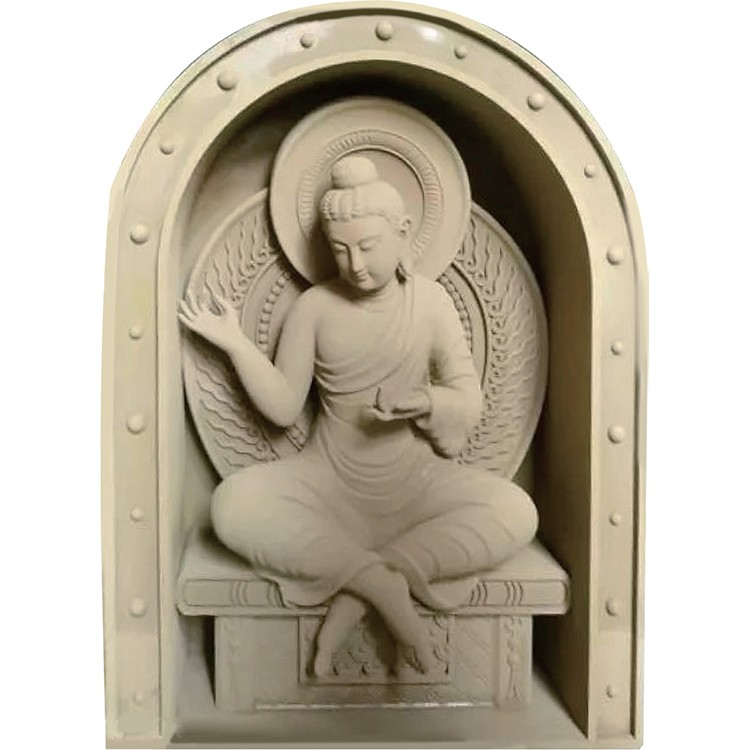
The following public company information is provided as a neutral reference. The company offers 3D printed ceramic craft products, including a Buddha Statue measuring 1000*600*500mm made with 150-mesh ceramic powder and a gold effect. Its main products include sand, metal, ceramic, and graphite 3D printers with consumables and overall solutions. Its team has nearly a decade of experience in sand mold 3D printing. It has a 3D printing industrialization base in Shaoyang City, Hunan Province, with a production workshop of about 3,000 square meters. These details are presented for verification purposes and do not constitute a recommendation.
Summary
In summary, how long it takes to print a Buddha statue with 3D printing depends on size, technology, layer height, and finishing requirements. Small models may finish in hours, while large Buddha statue 3D printing projects can span days or more once post-processing is included. A clear breakdown of each stage is the most reliable way to plan a schedule.