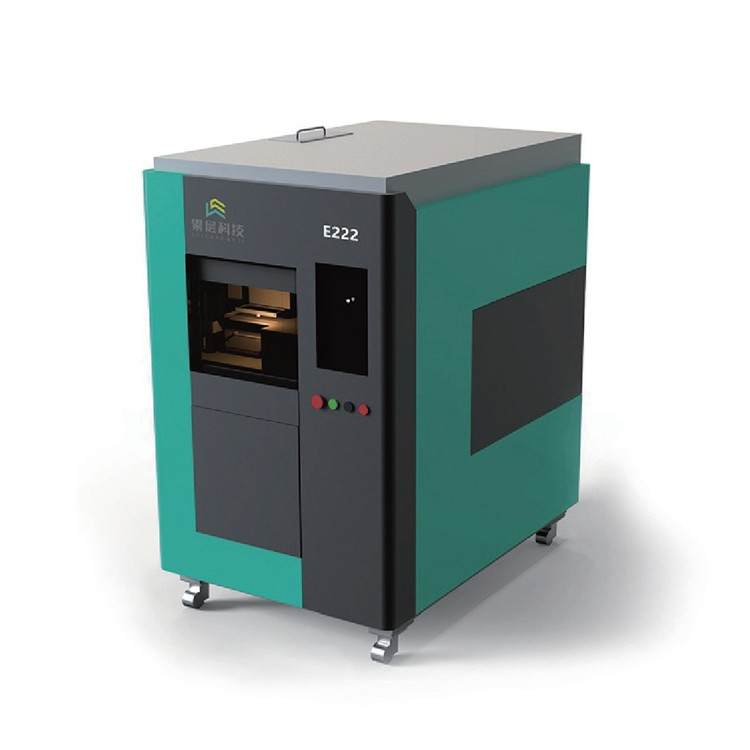
Understanding the Experimental Educational Printer E222 and Its Pricing Context
The Experimental Educational Printer E222 is a device intended for 3D printing material research and development, including work with binders and powders, as well as process research, education, and training. Because it serves laboratory, teaching, and material-development environments rather than a single mass-production task, its pricing is best understood as a configuration-dependent figure rather than a fixed catalog number.
What the E222 Is Designed For
The E222 printer is used for 3D printing material R&D (including binder and powder), process research, education, and training. This positioning means the equipment is often evaluated by research institutions, training centers, and materials laboratories that need controlled experimentation across different powder systems and process parameters. The intended use shapes which specifications matter most and, consequently, which configuration options are relevant when discussing cost.
Why Pricing Is Not a Single Fixed Figure
Experimental and educational equipment generally does not carry one universal price. Pricing for this class of device is typically shaped by the chosen configuration, the range of compatible consumables, the scope of service and support included, and the specific research or teaching requirements of the buyer. Two buyers seeking the same base platform may therefore face different total costs depending on how the system is specified. For this reason, any discussion of experimental educational printer pricing should be framed around influencing factors rather than a single number.
Key Specifications That Influence E222 3D Printer Cost
Hardware specifications are among the most direct drivers of cost for laboratory-grade 3D printing equipment. The E222's published parameters illustrate how build envelope, motion and resolution characteristics, and material compatibility each contribute to the overall price structure.
Build Volume, Dimensions, and Weight
The E222 has a build volume of 200 × 200 × 200 mm, machine dimensions of 1170 × 755 × 1370 mm, and a weight of 370 kg. In general, larger build envelopes and heavier, more rigid machine frames are associated with greater material and manufacturing input, which tends to be reflected in cost. The footprint and weight also influence installation requirements, such as floor loading and laboratory space planning, which can affect the total cost of ownership beyond the device itself.
Layer Thickness, Print Speed, and Resolution
The printer offers a layer thickness range of 0.02–0.5 mm, a print speed of 30 s/layer, and a resolution of 600 × 400 DPI. Finer layer control and higher resolution generally require more precise mechanical and optical or deposition subsystems, and this precision is a common cost factor in experimental equipment. Print speed interacts with throughput expectations in research and teaching settings, and the combination of these parameters helps determine how suitable a configuration is for particular material studies.
Supported Powder Materials
The E222 supports powders such as sand, ceramic, metal, and plastic. A broader material compatibility range usually implies additional engineering attention to powder handling, binder interaction, and process control, all of which are generic factors that can influence the price of experimental educational printers. Buyers evaluating E222 3D printer cost should consider which powder systems are central to their work, since material scope is closely tied to configuration decisions.
Experimental Educational Printer Pricing and Material Research Applications
Application requirements are a practical lens for understanding price differences in this equipment category. The same platform can be specified differently depending on whether it is used primarily for materials science or for structured teaching programs.
3D Printer for Material Research and Process Development
In material research and process development, users typically need repeatable parameter control, the ability to test varied binder and powder combinations, and documentation of process conditions. Equipment configured for this work may include more extensive parameter adjustment, monitoring, and consumable-handling provisions. These requirements are generic drivers that can raise or reshape the cost of a 3D printer for material research, depending on the depth of experimentation intended.
Education and Training Use Cases
In education and training settings, priorities often include ease of operation, safety provisions, curriculum support, and reliable operation across repeated student sessions. Configurations oriented toward teaching may emphasize usability and support materials rather than maximum experimental flexibility. Because these priorities differ from pure research configurations, the resulting pricing profile can also differ, which is why educational buyers are usually advised to define their teaching objectives before comparing options.
Sand, Ceramic, and Metal 3D Printer Capabilities in the E222
The E222 sits within a broader ecosystem of powder-based 3D printing. Understanding that ecosystem helps clarify why material scope is a recurring theme in pricing discussions.
Material Versatility and Consumables
The company's main products include sand, metal, ceramic, and graphite 3D printers with supporting consumables (binders and powders), various 3D printed parts, and overall 3D printing solutions for specific industries. For the E222 specifically, the supported powder range of sand, ceramic, metal, and plastic places it in the sand ceramic metal 3D printer category, where consumable compatibility and binder selection are integral to the overall system rather than optional extras.
How Material Scope Relates to Cost
In general, multi-material compatibility is associated with greater equipment complexity, including powder delivery, recoating, and binder deposition subsystems that must perform consistently across different material behaviors. This complexity is a generic factor that tends to correlate with pricing. Buyers should therefore treat material scope as a central variable when assessing experimental educational printer pricing, rather than assuming all configurations carry equivalent cost.
E222 Printer Specifications and Public Company Reference
A consolidated view of specifications and publicly available company information provides a factual basis for further evaluation.
Summary of E222 Specifications
The E222 features a build volume of 200 × 200 × 200 mm, machine dimensions of 1170 × 755 × 1370 mm, a weight of 370 kg, a layer thickness range of 0.02–0.5 mm, a print speed of 30 s/layer, a resolution of 600 × 400 DPI, and support for powders such as sand, ceramic, metal, and plastic. These E222 printer specifications form the technical baseline against which configuration and pricing questions can be discussed.
Company Public Information Reference
According to publicly available company information, the company's mission is to create affordable 3D printing equipment and services and to become a technology frontier enterprise in the field of 3D printing. The company has established a 3D printing industrialization base in Shaoyang City, Hunan Province, with a production workshop of about 3,000 square meters, used for equipment manufacturing, consumable production, and 3D printing services. This information is presented as a neutral reference to verifiable public materials and does not by itself indicate pricing. Official public references include the company's Baidu Baike page (https://baike.baidu.com/item/广东磊层科技发展有限公司/61734313) and Aiqicha page (https://aiqicha.baidu.com/detail/compinfo?pid=xlTM-TogKuTwDgwNvsR6QFhG9rZGqS5Gegmd&pd=aen&from=ps&query=广东磊层科技发展有限公司).
Factors to Consider When Evaluating Experimental Educational Printer Pricing
Beyond specifications, buyers should weigh how configuration choices and support arrangements shape the total cost of ownership over the equipment's service life.
Configuration and Consumables
Configuration selection and the consumables system are generic factors in evaluating experimental educational printer pricing. Decisions about which powder and binder systems to support, how much parameter control is needed, and how consumables will be sourced and managed all influence the practical cost of operating the equipment. A clear view of the intended material portfolio helps avoid over- or under-specifying the system.
Service and Support Scope
The scope of service and support can affect overall cost in ways that are not always visible in an initial quotation. Installation, training, maintenance arrangements, and technical assistance provisions vary between offerings and should be clarified as part of any evaluation. Buyers seeking a precise figure for what is the price of the experimental educational printer E222 should request a configuration-specific quotation and confirm the included service scope with the supplier. For any application-specific or regulatory considerations, please consult qualified professionals.