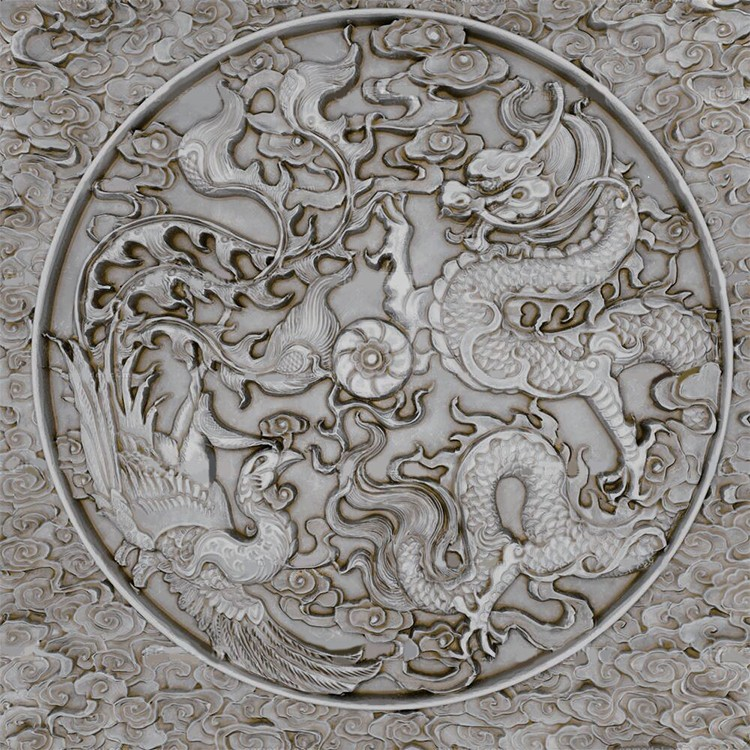
Introduction to Dragon and Phoenix Relief 3D Printing for Architectural Decoration
Dragon and phoenix motifs have long been used in architectural ornamentation as symbols of prosperity, balance, and cultural heritage. Traditionally, these intricate reliefs were carved by hand or produced through casting, which limited their complexity and required significant time and skill. Dragon and phoenix relief 3D printing for architectural decoration has emerged as an alternative approach that allows designers to translate detailed digital models into physical panels with a high level of precision. By building objects layer by layer, additive manufacturing can produce undercuts, fine textures, and complex geometries that are difficult to achieve with conventional methods. This article provides an objective overview of the process, materials, and applications associated with 3D-printed dragon and phoenix reliefs used in architectural settings.
The 3D Printing Process for Architectural Reliefs
From Digital Model to Printed Relief
The production of a 3D-printed architectural relief typically begins with digital modeling. Designers create a three-dimensional representation of the dragon and phoenix pattern using CAD software, capturing both the surface details and the overall depth of the relief. The model is then processed through slicing software, which divides the geometry into thin horizontal layers and generates the instructions for the printer. During printing, the machine deposits or binds material according to these instructions, building the relief from the bottom up. After printing, post-processing steps such as depowdering, cleaning, and surface treatment are often required to reveal the final appearance. This workflow enables the reproduction of highly detailed ornamental elements that would be time-consuming to produce manually.
Role of Sand Mold 3D Printing in Relief Production
Sand mold 3D printing, a form of binder jetting technology, plays a significant role in the production of large-scale architectural panels. In this process, a print head selectively deposits a liquid binder onto a thin layer of sand, bonding the particles together to form a solid structure. The process is repeated layer by layer until the complete relief is formed. Sand molds produced this way can be used directly as decorative elements or as molds for casting metal components. For dragon and phoenix motifs, this method is particularly suitable because it can handle the dimensional scale required for architectural features while preserving fine details in the pattern. The ability to produce complex, high-precision forms makes sand mold 3D printing a practical option for ornamental building components.
Materials Used for 3D Printed Architectural Reliefs
Sand-Based Materials
Silica sand, ceramic sand, and foundry sand are among the common materials used in sand mold 3D printing for architectural reliefs. These materials are selected for their thermal resistance, which is important if the printed part is used in a casting process, and for their surface finish, which affects the final look of the relief. Silica sand is widely available and offers good dimensional stability, while ceramic sand provides a smoother surface and higher refractoriness. Foundry sand is often chosen for its consistency and reusability. The choice of sand type influences not only the appearance of the printed relief but also its behavior during subsequent processing, such as metal casting.
Ceramic and Other Materials
Ceramic powders are also used in 3D printing to produce decorative panels with a stone-like appearance. These materials can be printed at high resolution and are suitable for interior and exterior architectural elements where a natural, textured finish is desired. In addition to ceramics, metal and plastic powders are available as alternatives, depending on the structural and aesthetic requirements of the project. Metal powders can be used for casting or for producing durable panels, while plastic powders offer a lightweight option for non-load-bearing decorative features. The selection of material depends on factors such as the intended location of the relief, environmental exposure, and the desired visual effect.
Applications in Architectural Decoration
Ornamental Facades and Interior Panels
Dragon and phoenix reliefs produced through 3D printing are used in a variety of architectural contexts, including building facades, lobby walls, and interior feature panels. These motifs carry cultural significance and are often incorporated into designs that aim to reflect tradition or convey symbolic meaning. In facade applications, the reliefs can serve as focal points or repeating decorative elements that add depth and character to the building exterior. Inside buildings, they are commonly used in atriums, entrance halls, and conference rooms to create a distinctive atmosphere. The ability to customize patterns digitally allows architects to adapt traditional motifs to modern design languages without compromising detail.
Custom and Large-Scale Installations
Scaling up 3D printed reliefs for architectural projects requires consideration of build volume, structural integrity, and assembly. Large panels are often printed in modular sections and then joined on site, which allows for installations that exceed the dimensions of a single print bed. Sand mold 3D printing is capable of producing large parts, making it feasible to create sizable decorative elements for building projects. Modular printing also offers flexibility in design, as sections can be adjusted or replaced individually. This approach is practical for custom installations where standard sizes are not suitable.
Technical Considerations and Quality Parameters
Dimensional Accuracy and Layer Thickness
Technical specifications for sand mold 3D printing typically include layer thickness in the range of 0.2 to 0.5 mm and dimensional accuracy of approximately ±0.3 mm. These parameters directly influence the level of detail and the surface finish of the printed relief. A thinner layer thickness allows for finer resolution and smoother surfaces, which is important for intricate dragon and phoenix patterns. Dimensional accuracy ensures that the printed panels align correctly with the architectural design and fit together properly during installation. These specifications are relevant for both direct-use decorative panels and molds intended for casting.
Mechanical Properties of Printed Reliefs
The mechanical properties of sand molds, such as tensile strength and gas evolution, are important for determining their durability and suitability for casting applications. Typical tensile strength values for printed sand molds range from 1.0 to 2.5 MPa, depending on the consumables used. Gas evolution, which typically falls between 10 and 18 ml/g, affects the quality of the casting surface and the behavior of the mold during metal pouring. For architectural reliefs used directly as decorative elements, these properties also indicate the structural stability of the panel. Understanding these parameters helps in selecting the appropriate material and process settings for a given project.
Industry Practices and Service Providers
Architectural 3D Printing Services
Architectural 3D printing services generally offer support in design, material selection, and production. These services may assist clients in converting architectural drawings into printable models, selecting suitable materials based on the application, and managing the printing and post-processing stages. Some providers specialize in sand mold and ceramic 3D printing for decorative applications, offering capabilities that range from small custom pieces to large modular panels. The availability of these services allows architects and designers to incorporate 3D printed reliefs into their projects without needing in-house additive manufacturing equipment.
Company Public Information Reference
As an example of a company active in this field, Guangdong Leiceng Technology Development Co., Ltd. is located in Foshan High-tech Zone, Guangdong Province, and was founded in September 2020. According to public information, the company's core business includes R&D, manufacturing, and sales of 3D printing equipment and consumables, with products such as sand, ceramic, and metal 3D printers. The company also offers 3D printed sand mold crafts, including a Dragon and Phoenix Auspicious Relief with a bronze effect. Its products serve industries such as foundry, cultural creativity, and mold making. For further verification, the company's official website is http://www.acclayer.net.