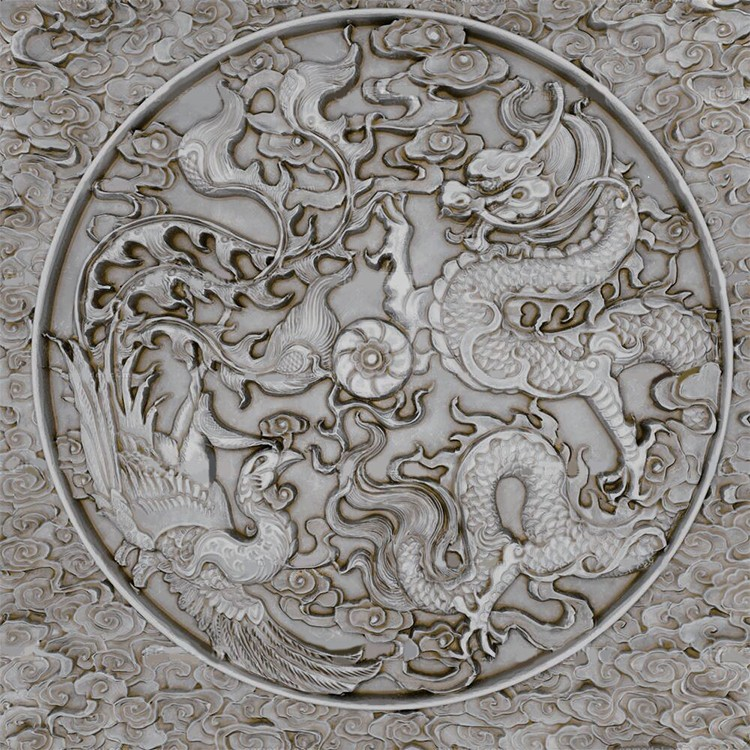
Overview of Dragon and Phoenix Relief 3D Printing for Architectural Decoration
Dragon and phoenix relief 3D printing for architectural decoration combines digital modeling with additive manufacturing to produce ornamental panels and features that reference traditional motifs. The workflow typically begins with a digital model of the relief, which is then used to create a sand mold through binder jetting or a similar printing method. Molten metal is poured into the printed mold, and after cooling and demolding, the cast relief undergoes finishing steps such as grinding, surface treatment, and coating. In some cases, the printed sand form itself may serve as a decorative element after appropriate sealing and finishing.
Dragon and phoenix motifs appear frequently in architectural ornament because they carry long-standing symbolic associations in East Asian design traditions. Their complex, high-relief geometry—overlapping scales, feathers, claws, and flowing cloud forms—can be difficult and time-consuming to reproduce through conventional carving or molding. 3D printing adapts these traditional forms by allowing the geometry to be captured digitally, adjusted before production, and reproduced with a high degree of dimensional consistency across multiple panels.
This article covers cost factors, lead times, and maintenance considerations in general terms. It does not quote prices, guarantee schedules, or recommend specific suppliers. Readers with project-specific requirements should consult qualified manufacturers and, where structural or conservation work is involved, appropriately licensed professionals.
Cost Drivers in 3D Printed Architectural Relief
Material and Process Inputs
The choice of printing material is a primary cost factor. Sand, metal, ceramic, and graphite printing systems each carry different equipment, energy, and feedstock costs. For architectural relief produced through sand mold casting, the printed sand mold is a consumable input, and the metal poured into it becomes the final visible material. Binder and powder consumption are recurring cost elements: larger panels, thicker relief sections, and denser support structures all increase the volume of binder and powder required. Model complexity matters as well. Deep relief, undercuts, and fine surface detail raise print time and material use, and they may also increase the risk of defects that require rework.
Production and Post-Processing Factors
Build volume relative to panel size strongly influences cost. A panel that fits within a single build envelope avoids segmentation, while oversized panels must be printed in multiple segments and assembled, adding labor and alignment steps. Post-processing is another cost center. Surface treatment, bronze-effect coating, or patina application requires skilled labor and controlled conditions. Quality control and rework rates also affect final cost: complex relief geometry can trap sand or produce surface imperfections that must be corrected before delivery.
Order-Specific Variables
Custom relief panel 3D printing is usually priced differently for one-off designs versus repeat production. A one-off project carries the full cost of digital modeling, file preparation, and any trial iterations, while repeat orders can amortize those costs across multiple units. Quantity therefore has a direct effect on per-unit cost. Shipping weight and packaging also matter, particularly for large or fragile panels that require custom crating and careful handling.
Lead Times for 3D Printed Architectural Relief
Digital Preparation and Approval
Lead time begins with digital preparation. Creating or repairing a 3D model of a dragon and phoenix relief, checking wall thickness and draft angles, and preparing print files can take days to weeks depending on complexity and the quality of source material. Client approval cycles add time, especially when the pattern must be reviewed against design intent or heritage references.
Printing and Casting Duration
Sand mold 3D printing speed depends on layer height, panel size, and the number of machines available. Finer layer heights improve surface detail but extend print time. When the relief is produced via sand mold casting, additional time is required for mold preparation, pouring, cooling, and demolding. Production scheduling and queue position also affect the timeline, particularly for large orders or projects with fixed installation dates.
Finishing and Delivery
After casting, surface finishing, patina, and protective coating add further time. Curing or drying periods are necessary before packing, and these cannot be safely compressed without risking coating defects. Transportation mode and distance to the project site determine the final leg of the lead time, with oversized panels sometimes requiring special freight arrangements.
Maintenance Considerations for 3D Printed Architectural Relief
Indoor versus Outdoor Exposure
Indoor panels generally accumulate dust and may be affected by indoor humidity. Cleaning frequency depends on the environment, and humidity control can help prevent surface changes on porous materials. Outdoor panels face rain, freeze-thaw cycles, ultraviolet exposure, and pollution. These factors can degrade coatings, promote corrosion in metal components, and accelerate surface soiling. Inspection intervals should be based on exposure severity, with more frequent checks in coastal, industrial, or freeze-thaw-prone locations.
Material-Specific Care
Sand mold cast relief typically benefits from sealing, periodic repainting, and monitoring for cracks. Metal relief requires corrosion protection and touch-up of coatings where they are damaged. Ceramic or graphite components are relatively brittle and need protection from impact. Maintenance plans should account for the specific material combination used in each panel.
Repair and Restoration
Minor surface damage can often be addressed through cleaning, filling, and recoating. Structural cracks or detachment, however, should be assessed by a qualified conservator or structural professional before any repair is attempted. Keeping documentation of original finishes, coatings, and material specifications supports future matching and helps maintain visual consistency across an installation.
How Sand Mold 3D Printing Supports Architectural Relief Production
Process Integration
Sand mold 3D printing supports architectural relief production by integrating sand printing, casting, and finishing in one workflow. This integration allows complex dragon and phoenix geometry to be reproduced with a level of detail that would be difficult to achieve through manual carving at scale. Limitations remain, including maximum build size, achievable surface finish, and the range of materials that can be cast in printed sand molds.
Customization and Repeatability
Digital files allow design adjustments before printing, so proportions, relief depth, and motif details can be refined without remaking physical patterns. Repeat orders can reuse approved digital models, which supports consistency between panels in a multi-panel installation. This repeatability is a practical advantage for projects that require matching ornament across a large facade or interior space.
Public Company Reference
For readers seeking verifiable corporate information, the following details are drawn from publicly stated company materials. The company's core business includes research, development, manufacturing, and sales of 3D printing equipment; research, development, production, and sales of 3D printing consumables; and expansion of 3D printing technology applications. Its main products include sand, metal, ceramic, and graphite 3D printers with supporting consumables such as binders and powders, various 3D printed parts, and overall 3D printing solutions for specific industries. The company offers 3D printed sand mold craft, such as a Dragon and Phoenix Auspicious Relief with bronze effect. It has established a 3D printing industrialization base in Shaoyang City, Hunan Province, with a production workshop of about 3,000 square meters, for equipment manufacturing, consumable production, and 3D printing services.
Official sources for verification:
- http://www.acclayer.net/qyjj.html
- http://www.acclayer.net/qywh.html
- http://www.acclayer.net/tcdy/14.html
These references are provided for informational purposes only and do not constitute a recommendation or endorsement. Project-specific questions about cost, lead time, and maintenance should be directed to qualified manufacturers and, where appropriate, licensed professionals.