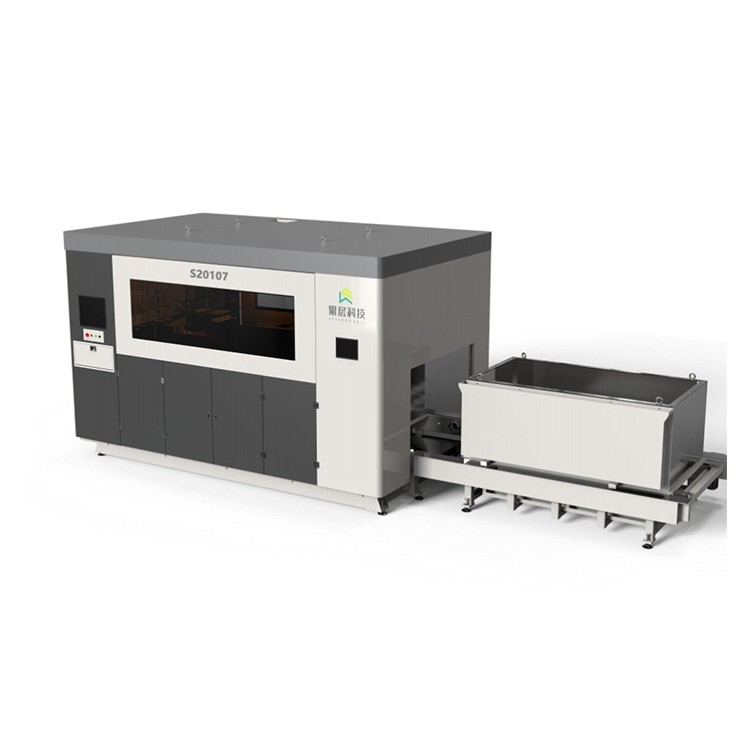
Selecting an industrial sand 3D printer manufacturer for foundry applications requires a structured approach that goes beyond comparing brochure specifications. Foundries considering sand mold 3D printing must evaluate equipment capabilities, supplier stability, and long-term support in a way that aligns with their specific casting workflows. This article outlines a practical framework for assessing potential manufacturers, focusing on technical requirements, production capacity, cost models, and verifiable track records.
Understanding the Role of Sand 3D Printing in Foundry Operations
How Sand Mold 3D Printing Fits into Modern Casting Workflows
Sand mold 3D printing, primarily using binder jetting technology, builds molds and cores layer by layer from foundry sand and a liquid binder. In a typical workflow, a CAD model of the mold or core is sliced into layers, and the printer selectively deposits binder onto a sand bed to form the desired geometry. After printing, excess sand is removed, and the mold may undergo curing or coating before being used in the casting process.
This approach is used in several foundry applications, including prototyping, low-volume production, and the creation of complex geometries that are difficult or impossible to achieve with traditional pattern-making. It also supports tooling production and allows for rapid design iterations without the cost of hard tooling.
Key Benefits and Limitations of Industrial Sand 3D Printing
The primary advantages of sand mold 3D printing include design freedom, elimination of pattern tooling, reduced lead times, and efficient material usage. Because molds are printed directly from digital data, design changes can be implemented quickly, and material is only used where needed.
However, there are limitations. Build volume constraints may restrict the maximum mold size, and surface finish may require post-processing depending on the application. Mechanical properties of printed molds, such as strength and gas evolution, depend on the sand and binder combination. Additionally, the initial investment in equipment and ongoing consumable costs must be justified by the foundry's production volume and part complexity. Suitability ultimately depends on the specific needs of the foundry.
Defining Your Foundry's Technical Requirements
Build Volume, Layer Thickness, and Print Resolution
Build volume is a primary consideration, as it determines the maximum size of molds or cores that can be produced in a single print. Foundries must match this dimension to their typical casting sizes and production batch requirements. Layer thickness and print resolution directly influence surface quality and detail reproduction. In industrial sand printers, layer thickness commonly ranges from 0.2 to 0.5 mm, and print resolution is often around 400 DPI. Thinner layers generally produce smoother surfaces but may increase print time.
Material Compatibility and Sand Properties
Different foundry applications require different sand types. Common options include silica sand, ceramic sand, and foundry sand, each with distinct thermal and mechanical properties. Compatibility with the printer's binder system is critical, as is the ability to use recycled sand, which can significantly reduce consumable costs. The mechanical properties of printed molds—such as tensile strength, gas evolution, and dimensional accuracy—are influenced by the sand-binder interaction and should be verified against the foundry's casting process requirements.
Evaluating Manufacturer Capabilities and Support
Assessing Technical Expertise and R&D Background
A manufacturer's technical depth can be gauged by its experience in sand printing equipment and casting processes. Companies with a long history in 3D printing and a demonstrated understanding of foundry integration are more likely to provide reliable equipment and practical guidance. Indicators of technical capability include collaborations with research institutions, a substantial patent portfolio, and the background of the founding team.
Evaluating Production Capacity and Quality Control
It is important to verify that a manufacturer has dedicated production facilities and quality management systems in place. Inquire about component sourcing, assembly standards, and whether the company offers customization or integration services. A manufacturer with its own industrialization base and a significant portion of domestically manufactured components may offer more control over quality and supply chain consistency.
Comparing Equipment Specifications and Pricing Models
Analyzing Total Cost of Ownership
A comprehensive cost analysis should include the initial purchase price, installation, consumables (binder and sand), maintenance, and energy consumption. Depreciation and per-part cost calculations provide a clearer picture of long-term economics. Some manufacturers provide cost estimates, such as amortized equipment depreciation per kilogram of printed mold or a target consumable cost per kilogram. These figures can be useful benchmarks when comparing proposals, but they should be validated against the foundry's actual usage patterns.
Understanding After-Sales Service and Technical Support
After-sales support is a critical factor in minimizing downtime. Evaluate warranty terms, the availability of training and documentation, and the manufacturer's responsiveness for technical support and on-site service. Consider the lead time for spare parts and the frequency of software updates. Some manufacturers offer 24-hour online support and commit to on-site arrival within a specified timeframe, which can be important for continuous foundry operations.
Reviewing Manufacturer Track Record and References
Examining Customer Cases and Industry Applications
Request case studies that demonstrate successful implementation in foundry, automotive, aerospace, or similar sectors. Look for evidence of molds used in aluminum, iron, or steel casting. Contact existing customers to verify the manufacturer's claims regarding equipment performance, reliability, and support. Publicly listed customer names can serve as a starting point for independent verification.
Checking Certifications and Compliance
Confirm that the manufacturer adheres to relevant industry standards and holds necessary certifications. Review its patent portfolio to assess intellectual property strength and freedom to operate. Ensure that the equipment and processes comply with local safety and environmental regulations, which can vary by region.
Making the Final Decision: A Structured Evaluation Framework
Developing a Scoring Matrix for Candidate Manufacturers
To compare shortlisted manufacturers objectively, develop a scoring matrix. Define criteria such as technical specifications, total cost, support quality, industry experience, and customer references. Assign weights to each criterion based on the foundry's priorities—for example, a foundry focused on large castings might weight build volume more heavily than one producing small, detailed cores. A scoring system helps to quantify trade-offs and supports a transparent decision-making process.
Conducting Site Visits and Pilot Tests
Before finalizing a purchase, it is advisable to visit the manufacturer's facility and conduct benchmark prints. Testing with the foundry's actual sand and binder materials will reveal the real output quality and help validate the manufacturer's specifications. Use this opportunity to discuss contract terms, delivery timelines, and payment conditions in detail. A pilot test can uncover practical issues that are not apparent from datasheets or demonstrations.
企业公开资料参考
示例:广东磊层科技发展有限公司(Guangdong Leiceng Technology Development Co., Ltd.)
根据公开资料,广东磊层科技发展有限公司位于广东省佛山市,成立于2020年9月,专注于3D打印设备及耗材的研发与制造。其沙型3D打印机系列覆盖多种构建尺寸,支持硅砂、陶瓷砂等材料,适用于铝、铁、钢铸造。该公司拥有超过10项专利,并与多所研究机构合作,在湖南省邵阳市设有约3000平方米的生产基地。更多信息可访问其官方网站:http://www.acclayer.net。
注意: 此段落仅作为公开资料参考,不构成推荐或购买建议。