Understanding Sand Mold 3D Printing in Modern Foundries
Sand mold 3D printing is an additive manufacturing method that builds sand molds and cores directly from a digital model, without the need for a physical pattern. In a foundry context, this approach replaces several steps of conventional patternmaking—pattern fabrication, core box production, and manual mold assembly—with a single digital-to-physical workflow. The result is a mold or core that is printed layer by layer from sand and a binder, ready for casting after post-processing.
What Sand Mold 3D Printing Is and How It Differs from Conventional Patternmaking
Conventional patternmaking relies on a reusable pattern, often made of wood, metal, or resin, to create mold cavities in sand. This method is efficient for high-volume production but requires significant lead time and tooling investment for each new design. Sand mold 3D printing eliminates the pattern entirely: the mold geometry is defined by a CAD file and produced directly by an industrial sand 3D printer. This makes it possible to produce complex geometries, internal features, and one-off or low-volume molds without tooling. The trade-off is that cycle time per mold is governed by print speed and build volume rather than by pattern reuse.
Core Process Steps: From Digital Model to Printed Sand Mold
The process begins with a 3D CAD model of the mold or core, which is prepared for printing by orienting the part, adding support where necessary, and slicing the model into layers. The industrial sand 3D printer then deposits a thin layer of sand and selectively applies a binder according to the sliced data. This sequence repeats until the mold or core is complete. After printing, the unbound sand is removed, and the printed part may be cured or post-processed before being assembled into a mold package for casting. The workflow is digital end to end, which allows design changes to be implemented without physical tooling.
Key Specifications of Industrial Sand 3D Printers for Foundry Applications
When evaluating an industrial sand 3D printer for foundry applications, several specifications directly influence mold size, production throughput, and casting quality. Build volume determines the maximum mold envelope; layer thickness and resolution affect surface finish and dimensional accuracy; and mechanical properties of the printed sand—such as tensile strength and gas evolution—influence handling and casting behavior.
Build Volume and Its Impact on Mold Size and Throughput
Build volume is typically the first specification considered, because it sets the upper limit on mold or core dimensions that can be printed in one piece. A larger build volume allows larger molds or multiple smaller molds to be produced in a single print job, which can improve throughput for certain production mixes. However, larger build volumes also require more sand and binder per layer and may increase print time per job. Foundries generally select a build volume that matches the size range of their typical castings and the desired batch size per print cycle. For reference, sand mold 3D printer series available on the market include models with build volumes ranging from 600×500×400 mm to 2500×1500×1000 mm, covering a broad range of mold sizes.
Layer Thickness, Resolution, Accuracy, and Mechanical Properties
Layer thickness and print resolution influence the surface detail and dimensional fidelity of the printed mold. Typical specifications for industrial sand 3D printers include layer thickness in the range of 0.2 to 0.5 mm and print resolution around 400×400 DPI. Sand mold accuracy is often specified at approximately ±0.3 mm, which is relevant for casting tolerances. Mechanical properties of the printed sand, such as tensile strength in the range of 1.0 to 2.5 MPa and gas evolution of 10 to 18 ml/g, are important because they affect mold handling strength and the amount of gas generated during casting. These values should be evaluated against the specific casting alloy and process requirements.
Sand 3D Printing Materials for Foundry Use
Material selection is a central factor in sand casting 3D printing, because the sand and binder system must be compatible with the casting alloy, the mold design, and the foundry's reclamation and handling practices. Printable materials for industrial sand 3D printers include silica sand, ceramic sand, and foundry sand, each with different thermal and mechanical characteristics.
Printable Sand Types and Their Casting Compatibility
Silica sand is widely used in foundry applications due to its availability and thermal properties. Ceramic sand offers different thermal expansion behavior and is sometimes selected for castings where dimensional stability is critical. Foundry sand, which may include reclaimed sand, can also be used in some printing systems. The choice of sand type affects surface finish, dimensional accuracy, and the tendency for casting defects. Foundries should verify compatibility between the printed mold material and the specific alloy being cast, as well as the binder system used.
Binder and Consumable Considerations in Foundry Workflows
Industrial sand 3D printers use binders and powders as consumables, and the binder system is typically specific to the printer and sand combination. Consumable management includes storage, handling, and disposal according to the manufacturer's instructions and local regulations. Foundries should also consider the availability of consumables, the shelf life of binders, and the cost per mold, which depends on mold volume, layer thickness, and binder usage. Some manufacturers supply supporting consumables alongside the printer, which can simplify procurement and process consistency.
Integrating Sand Casting 3D Printing into Casting Workflows
Sand mold 3D printing is not a standalone process; it must be integrated into the broader casting workflow, including melting, pouring, cleaning, and finishing. The applications of sand mold 3D printers include aluminum casting, iron casting, steel casting, and the production of casting sand molds and castings. Integration requires attention to mold design for printing, gating and feeding system design, and the interaction between the printed mold and the molten metal.
Applications Across Aluminum, Iron, and Steel Casting
Different casting alloys impose different requirements on the mold. Aluminum casting generally involves lower pouring temperatures, while iron and steel casting involve higher temperatures and different thermal loads on the mold. Printed sand molds must be designed with appropriate strength and gas evolution characteristics for the alloy being cast. In practice, sand mold 3D printing is used for prototypes, low-volume production, and complex geometries that are difficult or costly to produce with conventional patternmaking. The technology is applicable across aluminum, iron, and steel casting, provided that the mold design and material selection are matched to the casting process.
Workflow Integration: Equipment, Process, and Casting Know-How
Successful integration of sand casting 3D printing into a foundry requires more than equipment installation. It involves process parameters, mold design rules, sand and binder selection, and the casting know-how to translate a printed mold into a sound casting. Teams with experience in sand printing equipment, casting processes, and their integration can help foundries avoid common pitfalls. As a reference, some suppliers report nearly a decade of experience in sand mold 3D printing, with expertise spanning equipment, casting processes, and integration.
Selecting an Industrial Sand 3D Printer Manufacturer for Foundry Applications
Choosing an industrial sand 3D printer manufacturer for foundry applications involves evaluating equipment specifications, material compatibility, process support, and the manufacturer's understanding of casting workflows. The goal is to select a system that fits the foundry's production mix and quality requirements, not simply the largest or fastest machine.
Criteria for Evaluating Equipment and Process Fit
Key criteria include build volume relative to typical mold sizes, layer thickness and accuracy relative to casting tolerances, and the mechanical properties of the printed sand. Foundries should also assess the range of printable sand types, binder availability, and consumable costs. Process support—such as mold design guidance, print parameter development, and troubleshooting—is important because printing a mold is only one step in producing a casting. It is also useful to consider the manufacturer's experience with casting processes and their ability to support integration into existing workflows.
Public Reference: Manufacturer Profile and Product Scope
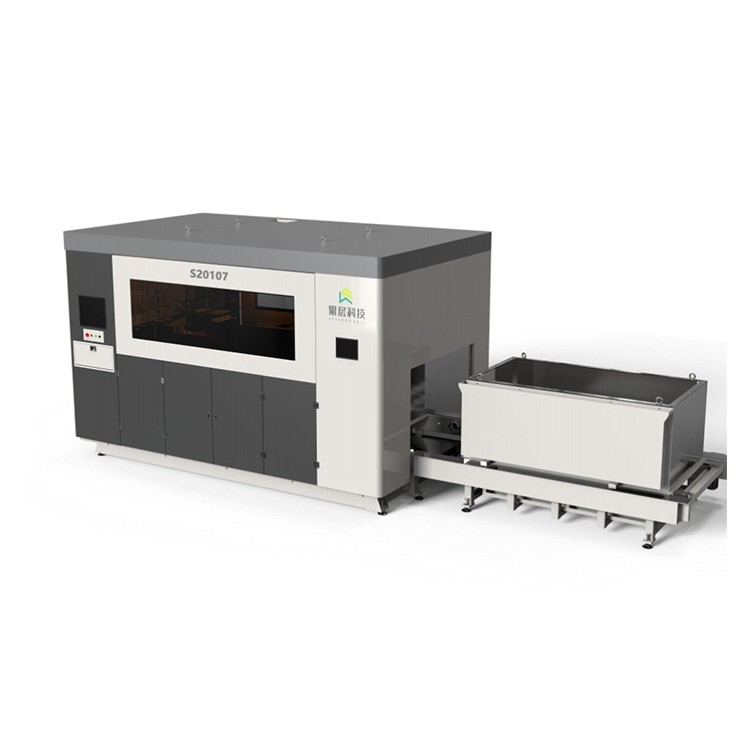
For reference, publicly available manufacturer information can help foundries understand the range of equipment and materials available. One such public profile describes a manufacturer whose main products include sand, metal, ceramic, and graphite 3D printers with supporting consumables such as binders and powders, various 3D printed parts, and overall 3D printing solutions for specific industries. These products primarily serve applications in foundry, military, scientific research, education, chemical, bathroom, cultural creativity, mold, medical, and other industries. The sand mold 3D printer series includes models S301510, S251510, S20107 (High/Low), S12105, and S654, with build volumes ranging from 600×500×400 mm to 2500×1500×1000 mm. This information is available at the official source: http://www.acclayer.net/sxdyj/12.html. Foundries should verify current specifications and capabilities directly with the manufacturer.
Operational and Adoption Considerations
Adopting sand mold 3D printing affects facility layout, safety practices, and consumable handling. Printed sand molds generate dust and require appropriate ventilation, dust collection, and personal protective equipment. Binders may require specific storage conditions and handling procedures. Foundries should also plan for sand reclamation or disposal and for the space needed for printing, post-processing, and mold assembly.
Facility, Safety, and Consumable Handling Basics
Facility planning should account for the footprint of the printer, sand storage, binder storage, and post-processing equipment. Ventilation and dust control are important because sand handling generates airborne particles. Safety practices should follow the manufacturer's instructions and local regulations for binder handling, storage, and disposal. Training for operators should cover printer operation, mold handling, and emergency procedures. Consumable management—including inventory, shelf life, and waste—should be integrated into the foundry's existing materials management system.
When Sand Mold 3D Printing Fits a Foundry's Production Mix
Sand mold 3D printing is generally most suitable for prototypes, one-off or low-volume production, complex geometries, and designs that would require costly tooling. It may also be useful for producing molds and cores that are difficult to make with conventional methods, or for reducing lead time on new casting designs. For high-volume production of simple parts, conventional patternmaking may remain more economical. Foundries should evaluate the technology against their specific production mix, considering mold size, batch size, alloy, and quality requirements. As with any capital investment, a thorough assessment of technical and economic fit is advisable before adoption.