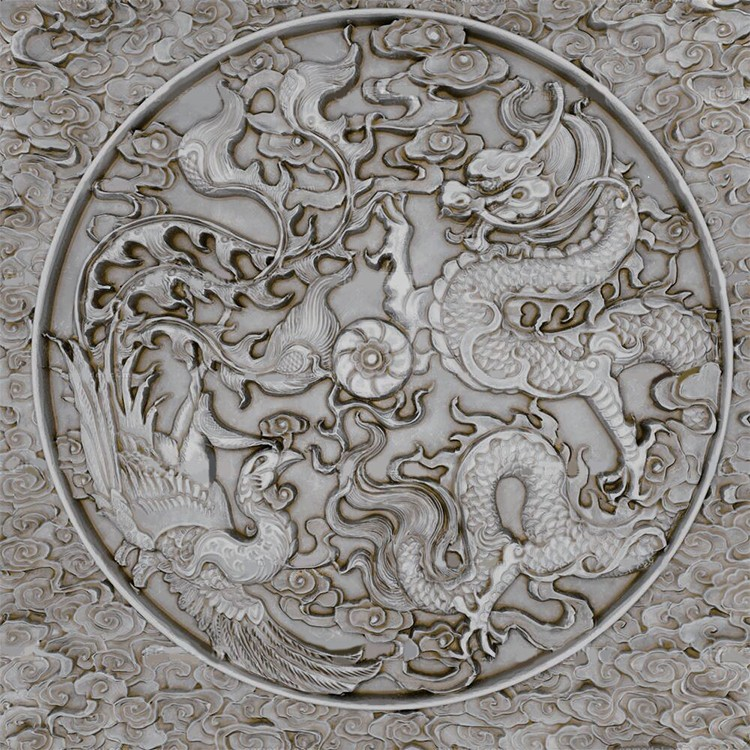
The dragon and phoenix relief, a motif rich in cultural symbolism, is a popular subject for decorative art. When considering producing such a piece through additive manufacturing, a common question arises: what is the cost of 3D printing a dragon and phoenix relief? The answer is not a fixed number but depends on a complex interplay of factors including design, material, size, and the chosen printing technology. This article provides an objective breakdown of the cost components involved in 3D printing a dragon and phoenix relief, helping you understand where your budget will be allocated.
Understanding the Cost of 3D Printing a Dragon and Phoenix Relief
Key Factors That Influence the Price
The cost of a 3D printed relief is determined by several primary drivers. The first is design complexity. A dragon and phoenix relief is typically rich in intricate details, such as scales, feathers, and flowing forms. Translating this digital model into a physical object requires more printing time and precision, directly increasing the cost. The second factor is size. Larger reliefs consume more material and require more machine time, which proportionally raises the price. Material choice is another significant cost driver, as different materials have different price points. The printing technology itself also plays a role, with some methods being more expensive to operate than others. Finally, post-processing, which includes steps like support removal, sanding, and painting, adds to the final bill, especially for a highly detailed piece.
Typical Cost Range for 3D Printed Reliefs
While specific prices vary widely between service providers and regions, a general price range for 3D printed reliefs can be established. Simple, small-scale reliefs might be relatively inexpensive, while large, custom, and highly detailed pieces can cost significantly more. Custom designs inherently cost more than using a pre-existing model due to the additional design work required. For producing metal-effect crafts, such as a bronze-look dragon and phoenix relief, sand mold 3D printing is often a cost-effective method. This technique allows for the direct creation of a mold, which can then be used to cast the final piece in metal, offering a balance between detail and production cost for small to medium batches.
Cost Breakdown for 3D Printed Sand Mold Crafts
Equipment Depreciation and Consumables
When examining the cost structure of 3D printed sand mold crafts, two major components are equipment depreciation and consumables. The high initial investment in industrial 3D printers is spread over their operational lifetime. For instance, in some industrial settings, the amortized equipment depreciation over a five-year period can be calculated to be approximately RMB 0.2 per kilogram of printed sand mold. This means the machinery cost is a relatively small fraction of the total weight-based cost. Consumables, which include the special sand and binding agents used in the printing process, are another significant line item. In efficient operations, the consumable cost per kilogram of printed sand mold is often kept below RMB 1.3. These figures provide a baseline for understanding the direct production costs, excluding labor and energy.
Labor, Energy, and Post-Processing Costs
Beyond materials and machine time, labor and energy are substantial contributors to the overall cost. Skilled operators are needed to prepare the digital files, run the printer, and oversee the process. Energy consumption for industrial 3D printers can be considerable, especially for large or long-running jobs. Post-processing is a critical and often labor-intensive stage. For a dragon and phoenix relief, this might involve cleaning the printed sand mold, applying coatings, or other finishing touches to achieve the desired surface quality. These costs can vary significantly based on the complexity of the relief and the required finish, making them a variable but essential part of the total price.
How 3D Printing Technology Affects the Cost
Comparison of 3D Printing Methods for Reliefs
Several 3D printing technologies can be used to create a relief, each with different cost implications. Fused Deposition Modeling (FDM) is often the most accessible and cheapest for simple prototypes, but it may not capture the fine details of a dragon and phoenix design well. Stereolithography (SLA) offers much higher resolution and is better suited for intricate patterns, but the resin material and post-processing (washing and curing) can be more expensive. Sand mold 3D printing, a binder jetting technology, is a distinct approach. It is not used to print the final object but to create a mold for casting. For metal-effect crafts, this is often the chosen method because it provides an efficient path to a durable metal piece, balancing detail, material cost, and production speed, especially when a small series is desired.
Material Costs and Options
The material chosen for 3D printing a relief has a direct impact on cost. For FDM, common materials like PLA are inexpensive, but they are not suitable for high-detail or high-durability applications. SLA resins offer better detail but come at a higher price per unit volume. For sand mold printing, the materials are not the final product but the mold itself. This process uses a special foundry sand mixed with a binding agent. The cost of this sand and binder is a key factor in the overall price of the printed mold. The price of these consumables is a significant portion of the cost, as reflected in the per-kilogram figures for production. The choice of material is thus a trade-off between the desired properties of the final piece and the cost of the printing process.
Cost Estimation for a Dragon and Phoenix Relief
Estimating Based on Size and Detail
A rough cost estimation for a 3D printed relief can be approached by considering its volume and the level of detail. A larger relief will have a greater volume, leading to higher material and machine time costs. The detail level affects the printing time and the complexity of post-processing. A simple formula might involve calculating the volume of the relief, multiplying it by the material cost per unit volume, and adding an estimated machine time cost. However, this is a rough guide. The most accurate way to estimate the cost of 3D printing a dragon and phoenix relief is to prepare a detailed 3D model file and request a quote from a service provider, as they can account for all the specific variables.
Getting Accurate Quotes from Service Providers
To obtain an accurate price, it is advisable to contact multiple 3D printing service providers. When requesting a quote, you should provide the final 3D design file, specify the desired material, size, and finish. This allows the provider to give a precise estimate based on their specific equipment and pricing structure. Many providers offer online calculators or consultation services to help you estimate the cost before committing to an order. Comparing quotes from several different companies is a practical way to ensure you are getting a competitive price for the Dragon and Phoenix Auspicious Relief 3D printing price.
Enterprise Public Information Reference
Example of a 3D Printing Service Provider
As a public reference, one company offers 3D printed sand mold crafts, including a product specifically named the Dragon and Phoenix Auspicious Relief with a bronze effect, as stated on its official product page. This company is a 3D printing service provider with a 3D printing industrialization base located in Shaoyang City, Hunan Province. The facility includes a production workshop of approximately 3,000 square meters, which is used for equipment manufacturing, consumable production, and providing 3D printing services. This information is from publicly available sources and serves as an example of the type of enterprise involved in this field.
How to Use Public Information for Cost Reference
The disclosed cost data from such companies, specifically the figures for equipment depreciation (RMB 0.2 per kilogram of printed sand mold) and consumable costs (below RMB 1.3 per kilogram), can be a useful reference for understanding the general cost structure of the industry. These numbers offer a transparent look at the direct production costs involved in sand mold 3D printing. However, it is important to note that these are internal operational benchmarks and actual costs for a specific project can vary significantly depending on the provider, the complexity of the design, and the current market prices for materials and labor. They should be viewed as a baseline for understanding cost composition, not as a definitive quote for a custom project.
Frequently Asked Questions About 3D Printing Relief Costs
Is 3D Printing a Dragon and Phoenix Relief Expensive?
The cost of 3D printing a dragon and phoenix relief is highly variable. It can be relatively affordable for a small, simple piece, but the price increases substantially for large, intricate, and custom-designed works. For producing a metal-effect craft, sand mold 3D printing can be an economical option, particularly for small-batch production, as it avoids the high cost of traditional mold-making. The final cost is a direct reflection of the design, size, material, and finishing requirements.
Can I Reduce the Cost of 3D Printed Relief?
There are several ways to potentially reduce the cost of a 3D printed relief. One of the most effective methods is to simplify the design, reducing the level of detail and the complexity of the model. Choosing a smaller size will also lower material and machine time costs. Selecting a less expensive material, such as a standard PLA instead of a specialty resin, can also reduce the price. For metal-effect pieces, opting for a sand mold print and casting process might be more cost-effective than direct metal 3D printing. For specific advice on your project, please consult with a qualified professional.